Rhythm Rush - Piano Music Game
- 4.4
- Rating
- 10.00M
- Installs
- Free
- Price

 Analysis by App-foxy
Rhythm Rush - Piano Music Game caught my attention because it turns music into a quick finger exercise rather than asking me to learn a full instrument. After spending time with it, I found a game that is easy to understand within minutes, satisfying in short sessions, and more demanding than its simple presentation suggests. The central appeal is immediate: songs create the rhythm, and my job is to keep my fingers moving in time.
That simplicity is also the reason I would not recommend it blindly to everyone. A rhythm game can feel fresh during the first few sessions and then become repetitive if its song selection, challenge curve, or reward loop stops giving me a reason to return. My experience with this title is best described as enjoyable in bursts, with its long-term value depending heavily on whether I still want a fast music-focused challenge after the initial novelty wears off.
How Rhythm Rush feels during the first week
The opening experience is approachable. I do not need musical training, knowledge of piano notation, or a large amount of free time to understand what the game wants from me. The store describes it as a new rhythm experience, and that idea comes through in play: the music provides the momentum while the screen asks me to respond with accurate taps.
You May Also Like

 Blood Strike: 2.5 Anniversary
Blood Strike’s Loadouts Turn Every Drop Into a Tactical Gamble
A close look at Blood Strike’s custom loadouts: how fast access to signature weapons reshapes its battle royale rhythm, rewards preparation, and narrows the gap between fights.

 Pandora - Music & Podcasts
Pandora’s Music Is Easy to Start, but Harder to Recover
Pandora’s strength is its low-effort path from a seed to a station. Its weak spot is how much confidence it asks you to place in connection, setup, and quiet recovery.

 8 Ball Pool
 Is Built on Rivalries, Rematches, and Routine
A close look at the rivalries, rematches, shared routines, and unanswered safety questions that turn a quick pool match into a persistent mobile community.

 Samsung Music
’s Quiet Strength Is Playing What You Already Own
Its reach comes less from spectacle than from dependable access to a personal library. That simplicity is both the app’s strongest retention engine and its ceiling.

 AccuWeather: Weather Radar
AccuWeather Review: A Quick, Clear Forecast for Everyday Decisions
For everyday plans, the best forecast is the one you can understand quickly. AccuWeather makes rain timing, radar, and local conditions easy to act on, with a few trade-offs.

 Hill Climb Racing
Why Hill Climb Racing Still Turns Crashes Into One More Run
A tiny car, a bumpy hill and one more upgrade: Hill Climb Racing keeps resurfacing because its simple chaos makes every near-miss feel personal.
More From Our News Desk



I particularly like this kind of design for the small gaps in a normal day. A short session works when I am waiting for an appointment, taking a break from work, or looking for something more active than scrolling through social media. It is not a game I need to mentally prepare for. I can open it, play for a while, and put it down without losing the thread of a story or a complicated strategy.
The piano theme gives the game a familiar identity, but I would not approach it expecting a serious piano-learning tool. The useful skill here is timing and visual reaction, not finger placement on a real keyboard or understanding scales. That distinction matters. Someone who wants to practice music theory will be better served by an educational app, while someone who wants to turn songs into a reflex challenge will find a more suitable match here.
During the first week, the strongest sensation is the link between sound and movement. When my taps line up well, the game feels almost automatic, as if the track is pulling my hands along. When I miss, the interruption is noticeable because the rhythm stops feeling like a continuous performance. That feedback makes even a short attempt feel purposeful instead of passive.
I recommend using headphones when the surroundings are quiet enough to make them practical. The music is not just background decoration; it helps me anticipate the next input. In a noisy room, visual attention becomes more important, and that can make the same section feel less comfortable. This is one of the first practical trade-offs: the game is easier to enjoy when I can hear its timing clearly, but it remains useful as a visual reflex game when sound is unavailable.
A good first-week routine is to begin with short attempts rather than immediately chasing perfect runs. I found that playing several times in a row can make small mistakes more frustrating, especially when my hands become tense. Taking a break after a difficult attempt helps me return with better timing. This is a simple habit, but it prevents the game from turning a relaxing pause into an unnecessarily competitive session.
The title comes from Boom Studio Limited, and its presentation is clearly aimed at broad accessibility. It is free to install and carries an Everyone age rating, which makes it easy to suggest for casual players and families looking for a music-themed game without an intimidating learning curve. Parents should still treat the in-app purchase system as something to review before handing a device to a child, since optional items range from $0.49 to $75.88.
The first-week question is not whether I understood the controls. I did. The more important question is whether the song-driven challenge gives me enough variation to keep returning. At the beginning, the answer is usually yes because learning the rhythm and improving my reactions supplies its own motivation. The game benefits from that immediate loop: listen, respond, miss or succeed, and try again.
What makes the early sessions work
One non-obvious strength is how naturally the game fits different attention levels. I can play with full concentration and treat a song as a focused challenge, or I can use it as a brief mental reset. That flexibility is more valuable than it sounds. Many music games demand a longer commitment because a track needs to reach its end, while this kind of format works better when I have only a few spare minutes.
Another useful approach is to treat each attempt as timing practice rather than as a judgment of skill. If I focus only on the result, a missed sequence feels like failure. If I focus on the point where my timing drifted, the same attempt becomes information. I start noticing whether I am tapping early, reacting late, or losing concentration after a repeated pattern. That makes the game more rewarding for players who enjoy gradual improvement.
I also found that the best time to play is not always when I am most bored. If I am tired, distracted, or holding the phone awkwardly, rhythm accuracy suffers quickly. A short session after a break can be more satisfying than a longer session at the end of an exhausting day. This is a realistic limitation, but it also explains why the game works well as a purposeful pause instead of a background activity.
Whether it still deserves attention after the novelty fades
Rhythm games live or die by repeat value. The first month is when the initial excitement has to become a habit, and this is where my opinion becomes more measured. The core action remains pleasant, but repeated play naturally exposes the limits of a simple rhythm loop. Once I have seen enough familiar patterns, I need a personal reason to continue: improving accuracy, completing a difficult section, enjoying the music, or fitting a quick challenge into my routine.
For me, the most sustainable use is not daily grinding. I prefer keeping it as a rotating game on my phone, returning when I want a music-based reflex challenge rather than forcing myself to play every day. That approach reduces fatigue and helps the game feel fresh when I come back. Players who enjoy chasing mastery may find more lasting motivation, while players who need constant new mechanics may lose interest sooner.
The game has a 4.6 average from around 26 thousand ratings, and it has passed 10 million installs. Those figures suggest that its straightforward rhythm format has reached a large audience, but they do not decide whether it belongs on my device permanently. Popularity can confirm that the basic idea works for many people; it cannot replace the personal test of whether I enjoy repeating the same kind of challenge.
Compared with traditional piano-learning apps, Rhythm Rush is much less demanding and much less educational. I can start playing without studying lessons, but I will not come away with the same practical understanding of an instrument. Compared with larger rhythm games, its appeal is likely to be the lower barrier to entry and the ability to play casually. The trade-off is that players seeking deep customization, a broad competitive structure, or a long progression system may prefer a more elaborate alternative.
That comparison helped me identify the right audience. I would choose this game over a lesson app when I want entertainment rather than instruction. I would choose it over a complex rhythm title when I want something that can be picked up quickly. I would skip it in favor of a deeper music game if I already know that I need extensive progression, detailed performance statistics, or a strong social layer to stay engaged.
A realistic month-to-month routine
Imagine a normal weekday: I finish a task, have ten minutes before the next commitment, and want something that wakes up my attention without pulling me into a long narrative. This is where the game earns its place. I can use one or two attempts as a reset, then close it before the break becomes a distraction. The key is setting a natural stopping point instead of opening it with the vague intention of playing indefinitely.
For longer-term use, I would create a small personal challenge. I might return to a track that previously caused mistakes, concentrate on keeping my hands relaxed, and stop once I notice improvement. This is more rewarding than playing only the easiest material. It also avoids a common problem with casual games: repeating comfortable sections without developing any new skill.
Another practical tip is to separate listening enjoyment from performance goals. Sometimes I want to follow the music and accept a less accurate result. Other times I want to play with complete concentration and care about every input. Expecting both experiences at once can create frustration. When I decide which mood I am in before starting, the game feels more flexible.
The title was released on May 31, 2023, and the current version is 1.9.23. It supports devices running Android 6.0 or newer. For someone using an older phone, compatibility is worth checking before planning around it, while users on a supported device should still keep enough free attention for the timing-based play. The game is free, which makes trying it low-risk, but optional purchases can change how comfortable the experience feels for people who are sensitive to spending prompts.
Where the maintenance burden appears
There is no complicated setup routine that I need to maintain, but the game still asks for a little discipline if I want it to remain enjoyable. The main maintenance task is managing my own play frequency. If I return too often without a clear goal, the rhythm loop can become mechanical. If I leave it untouched for too long, I may forget which patterns were challenging and lose the small sense of progress that makes a return satisfying.
Purchase awareness is another part of maintenance. Because the game is free to start and includes in-app items, I would not hand it to a child without checking the device’s purchase protections first. Adults who prefer completely uninterrupted free play should also pay attention to how the game presents optional spending. The listed price range reaches $75.88 for an item, so the free entry point should not be confused with a promise that every part of the experience is equally free.
My best approach is to treat purchases as unnecessary until the game has proved that it belongs in my routine. I would play it long enough to understand whether I enjoy the basic rhythm loop before paying for anything. This is especially important here because the central appeal is already available at no upfront cost. Spending should solve a specific annoyance or support a deliberate choice, not simply follow the excitement of a first session.
Device context can affect the experience as well. Rhythm games are sensitive to distraction, hand position, and audio clarity. I would avoid playing while walking, multitasking, or using the phone in a cramped grip. Those situations make mistakes feel like technical problems even when my attention is the real issue. A stable position and a quiet moment do more for performance than forcing another attempt.
Why fatigue eventually becomes the main challenge
The most obvious source of fatigue is repetition. Tapping along to music is enjoyable, but it is still one central activity. If I need a game to constantly change its rules, introduce new strategic choices, or tell a developing story, this may not hold my attention for months. The music can refresh the mood, yet it cannot completely disguise a loop that no longer feels challenging.
Accuracy pressure can create a second kind of tiredness. When I focus too intensely on avoiding mistakes, my hands become stiff and my enjoyment drops. I have found that rhythm games work best when I respond lightly rather than trying to force every tap. This is a small but important technique: relaxed hands make the session feel more musical, while tense hands turn it into a test I am desperate to pass.
There is also a difference between fatigue and a genuine lack of fit. If I regularly prefer listening to songs without interacting, a music player is the better choice. If I want to build real piano ability, an instructional app is more appropriate. If I want a deep competitive ecosystem, I should look at a more specialized rhythm game. Rhythm Rush is not failing when it does not meet those needs; it is simply designed around a narrower kind of enjoyment.
I would also be cautious about using it as a constant background pastime. The game depends on attention, so playing while watching another video or carrying on a conversation weakens the experience. It is not a good substitute for a passive audio app. Its value comes from the small amount of concentration it demands, and that means it should be scheduled around activities that do not compete with it.
Who should keep it installed
I would keep this game installed if I wanted a free, approachable music game for short sessions, especially one that rewards timing without requiring previous musical knowledge. It suits people who enjoy repeating a track to improve, players who like quick reflex tests, and anyone looking for a more active break from ordinary phone browsing.
I would be less likely to recommend it to someone who dislikes repetition, expects a full piano curriculum, or wants every session to offer a dramatically different activity. I would also suggest caution for families managing in-app spending. The Everyone rating makes the game broadly accessible, but age suitability does not remove the need for sensible purchase controls.
My final judgment is that Rhythm Rush - Piano Music Game earns a place as a light, recurring diversion rather than as a permanent main game. Its first-week appeal is clear, and its month-to-month value is real when I use it intentionally: a few focused attempts, a personal accuracy goal, and enough time between sessions to avoid burnout. Its lasting strength is convenience, not endless depth.
After the novelty fades, I still see reasons to return, but they are specific. I come back for a quick rhythm challenge, a familiar song-driven flow, or the satisfaction of improving a difficult passage. I would not expect it to replace a piano-learning app or a larger rhythm title. For the right player, though, its free entry, accessible controls, and short-session design make it an easy recommendation. Just approach it as a focused musical game, protect yourself from impulsive purchases, and let your own routine decide whether it deserves permanent space.
FAQs for Rhythm Rush - Piano Music Game
01What is Rhythm Rush - Piano Music Game?
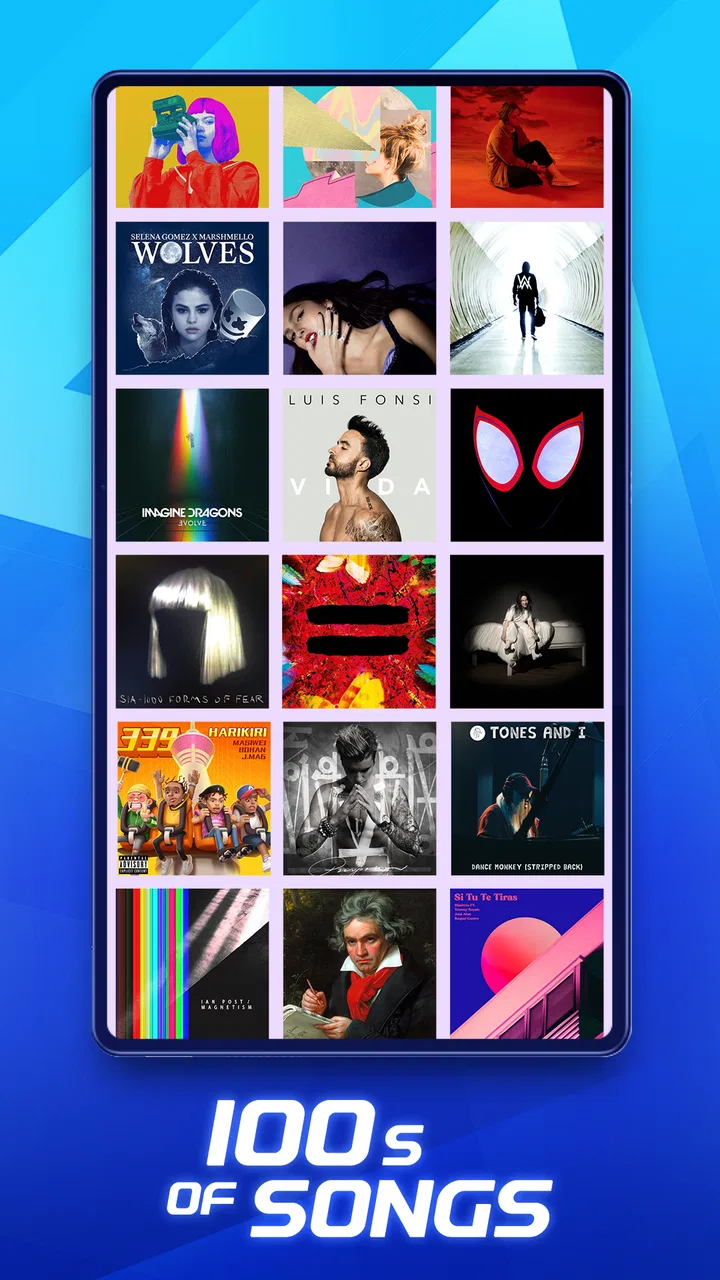
Rhythm Rush - Piano Music Game is an engaging mobile game designed for music and rhythm enthusiasts. Players tap along to popular songs, following on-screen prompts to score points. The game offers a variety of tracks and difficulty levels, providing both casual and hardcore gamers with a challenging and enjoyable experience.
02Is Rhythm Rush free to play?
Yes, Rhythm Rush is free to download and play. However, the game includes optional in-app purchases that allow players to unlock additional songs, remove ads, and access exclusive features. These purchases are not necessary to enjoy the game but can enhance the overall experience for those who choose to invest.
03What are the system requirements for Rhythm Rush?
Rhythm Rush is available on both Android and iOS devices. For Android, it requires version 5.0 and up, while iOS users need version 10.0 or later. The game is optimized for smooth performance on both platforms, but for the best experience, it is recommended to play on devices with updated operating systems and sufficient storage space.
04Does Rhythm Rush offer multiplayer features?
Currently, Rhythm Rush focuses on single-player gameplay, allowing users to enjoy music at their own pace. However, the game includes leaderboards where players can compete with friends and other users around the world, adding a social and competitive element to the experience.
05Can I play Rhythm Rush offline?
Rhythm Rush primarily requires an internet connection to download new songs and access certain features. However, once tracks are downloaded, players can enjoy them offline. This makes it convenient for users who wish to play on the go or in areas with limited internet connectivity.
Pros
- Engaging rhythm gameplay that's easy to learn.
- Wide variety of popular songs to play.
- Visually appealing with vibrant graphics.
- Customizable difficulty levels for all players.
- Responsive controls enhance user experience.
Cons
- In-app purchases can become expensive.
- Requires stable internet for smooth play.
- Limited free tracks available initially.
- Advertisements can be quite intrusive.
- High battery consumption during play.

Rhythm Rush - Piano Music Game
Gallery